
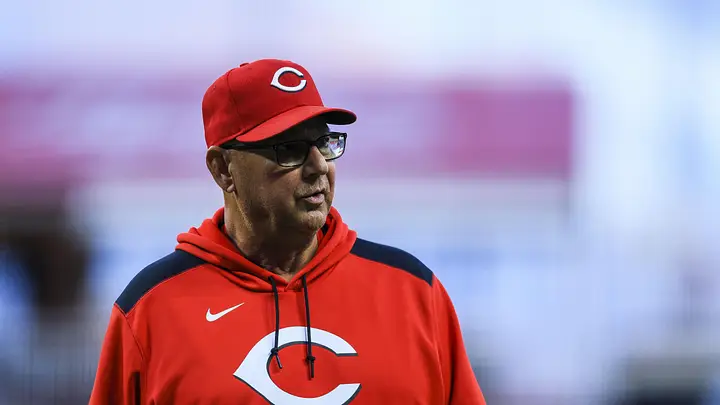
The Cincinnati Reds’ biggest need at the 2026 MLB trade deadline isn’t another short-term rental. It’s a clear plan for turning a disappointing season into a faster, smarter reset. Cincinnati entered July 20 at 45-53, last in the NL Central and 16½ games behind Milwaukee, with FanGraphs giving the club roughly a 1% chance to reach the postseason. That makes the Reds far more likely to sell before the Aug. 3 deadline than chase a miracle run.
The first priority should be acquiring MLB-ready hitters with multiple years of club control. Cincinnati doesn’t need another batch of distant prospects who might help in 2029. The Reds already have a young pitching foundation capable of keeping them competitive next season, but the lineup hasn’t provided enough consistent support around Elly De La Cruz and Sal Stewart.
READ MORE: Texas Rangers’ Biggest Needs Before the 2026 MLB Trade Deadline
Stewart has emerged as one of the best young hitters in the National League, reaching 20 home runs with a three-run shot against Colorado on Sunday. De La Cruz remains the roster’s most dynamic player, while JJ Bleday and Tyler Stephenson have supplied useful production. Beyond that group, however, too many spots have been inconsistent. MLB.com identified controllable offense as Cincinnati’s biggest deadline need, and that should mean targeting an outfielder or infielder who can step directly into Terry Francona’s lineup.
The Reds should specifically look for a hitter with power, plate discipline and defensive versatility. Great American Ball Park rewards power, yet Cincinnati still spends too many nights asking De La Cruz or Stewart to create the offense alone. A controllable corner outfielder, second baseman or designated hitter would give the lineup more length and reduce the pressure on Matt McLain, Spencer Steer and other hitters who haven’t met expectations.
Cincinnati’s second need is to maximize the value of its expiring contracts. Catcher Tyler Stephenson and first baseman Nathaniel Lowe are among the players who could attract contenders. Stephenson has heated up at exactly the right time, batting .353 with four home runs over 26 games since June 5. He also hit two homers and doubled in Sunday’s 9-6 win over Colorado.
That creates leverage. Quality catching is difficult to find in July, and Cincinnati shouldn’t settle for a low-ceiling return simply because Stephenson is approaching free agency. The goal should be a young player who can contribute in the majors by Opening Day 2027—not organizational filler.
The third priority is protecting the rotation’s long-term core. Rookie All-Star Chase Burns has been spectacular, going 11-1 with a 2.54 ERA and 10.3 strikeouts per nine innings before signing a seven-year, $105 million extension. Hunter Greene is controlled through 2028 with a club option for 2029, while Andrew Abbott and Brady Singer have given the Reds additional stability.
Greene could bring back the largest trade package, especially after recording 19 strikeouts against only one walk over his past two starts. But Cincinnati shouldn’t move a potential ace merely to say it “won” the deadline. Any Greene deal would need to deliver an impact, controllable major-league hitter plus additional premium talent.
READ MORE: Ryan Fox Stuns Royal Birkdale to Win The Open
Bullpen depth should also be part of the conversation. Injuries to Graham Ashcraft and Tony Santillan have exposed the need for more durable, high-velocity relief options. Those arms don’t have to be acquired in a blockbuster. They can be included as secondary pieces in trades involving veterans.
The Reds’ deadline mission is straightforward: sell the rentals, keep the young core and demand hitters who can help soon. Cincinnati doesn’t need another endless rebuild. It needs a deadline that finally connects its promising pitching to an offense capable of winning.





0 Comments